Source 2 conductor insulated blasting wire for mining, coal, and heating
Find 30 listings for 2 conductor insulated blasting wire from verified Chinese manufacturers. Buyers can compare copper stranded options with PVC or rubber insulation for cold-resistant mining, coal, and heating applications.
Key considerations
Products List






Comprehensive Sourcing Guide
Strategic Sourcing Guide for 2 Conductor Insulated Blasting Wire
Procuring 2 conductor insulated blasting wire requires a disciplined approach that balances technical precision with rigorous supplier vetting. In the industrial sector, particularly within mining and coal industries, the reliability of this specialized cabling is paramount for operational safety and efficiency. The product landscape involves complex variations in insulation materials, conductor types, and application-specific certifications. Buyers must navigate a market where attributes such as cold resistance, low resistance, and rugged construction are critical. This guide outlines the essential factors for sourcing these components, ensuring that procurement decisions are grounded in verified product attributes and industry standards rather than unverified claims.
Technical Specifications and Material Composition
The foundation of a successful procurement strategy lies in a deep understanding of the technical specifications. The core product, often identified as industrial blasting cable wire or cold-resistant blasting wire, is defined by its specific construction. The conductor material is consistently observed as copper, which is essential for maintaining low resistance and ensuring efficient signal transmission during blasting operations. The conductor type is typically stranded, providing the necessary flexibility to withstand the mechanical stresses associated with underground mining environments and dynamic cable handling.
Insulation and sheath materials vary significantly across listings, presenting a critical decision point for buyers. Some product profiles indicate the use of rubber for insulation, while others specify Polyethylene (PE) or Polyvinyl Chloride (PVC) for the sheath. The choice between rubber and PVC often depends on the specific environmental conditions of the application site. For instance, cold-resistant applications may demand materials that maintain flexibility at low temperatures, a feature explicitly noted in product attributes. The wire shape is uniformly round, and the size specifications range from 0.35mm up to 6.0mm², with specific models available in sizes like 0.50mm, 0.60mm, 0.69mm, and 0.86mm.
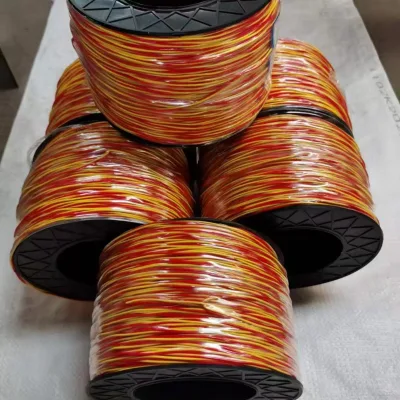
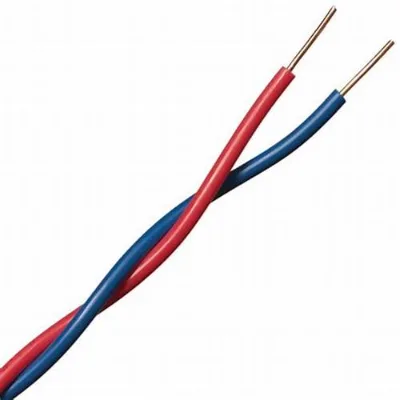
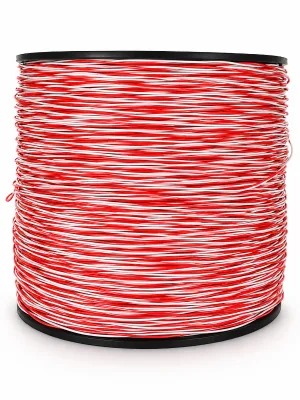
Buyers must also consider the core configuration. While the search term focuses on 2 conductor wire, the market offers a wide range of core counts, including 2-core, 3-core, 4-core, and up to 64-core options. For a 2-conductor requirement, the verification of the "Core No" attribute is essential to ensure the purchased unit matches the exact circuit design. The color coding is another vital specification, with available options including red, blue, green, black, yellow, and orange, which aids in identification and safety compliance during installation.
Compliance and Certification Verification
In the high-stakes environment of mining and coal industries, compliance is not merely a formality but a safety imperative. The product listings indicate a range of certifications that buyers should verify against their local regulatory requirements. Commonly cited certifications include VDE, CCC, CE, ISO, RoHS, and GJB. The presence of these marks suggests adherence to specific international and national standards, but buyers must treat these as observations that require validation for each specific batch or supplier.
The standards governing these cables include GJB, IEC, and UL, which dictate the performance and safety benchmarks. It is crucial to understand that the presence of a certification on a product page does not automatically guarantee that every unit in a specific order meets that standard. Buyers should request current certification documents and verify their validity with the issuing bodies. The standard "EN 50525" is mentioned in background knowledge but should be treated with caution unless explicitly confirmed by the supplier for the specific product model.
Furthermore, the "prod_standard" attribute often lists "by meters," indicating that the product is measured and sold by length rather than fixed unit counts, which impacts how compliance is tracked during delivery. The "Trademark" and "Brand Name" fields, such as KUANGBAO or RNE DA, serve as identifiers but do not replace the need for independent quality verification. Buyers should ensure that the supplier can provide traceability for the certifications listed, linking them directly to the manufacturing batch of the 2 conductor insulated blasting wire.
Cost Drivers and Pricing Dynamics
The pricing for 2 conductor insulated blasting wire is influenced by a complex interplay of material costs, manufacturing complexity, and order volume. The observed price range in the market spans from $0.03 to $122.89 USD, a vast disparity that reflects differences in wire gauge, insulation quality, and packaging. The lower end of the spectrum likely corresponds to smaller gauges or basic configurations, while the higher end may reflect specialized cold-resistant versions with robust PVC or rubber sheathing and higher core counts.
The Minimum Order Quantity (MOQ) is another significant cost driver, ranging from 1 unit to 5,000 units. Suppliers offering low MOQs may charge a premium per unit due to the setup costs associated with smaller production runs. Conversely, bulk orders can leverage economies of scale, though the total capital outlay increases. The "Selling Units" attribute indicates that items can be sold as single items or in larger packs, such as 100m per roll and carton.
Packaging also affects the final cost. The "prod_packing" attribute lists options like wooden drums or cartons, with a single gross weight of 30.000 kg for certain packages. The choice of packaging material and the resulting logistics costs must be factored into the total landed cost. Additionally, the "Customization" attribute, marked as available or yes, suggests that bespoke specifications can be ordered, which invariably carries a higher price point than standard off-the-shelf models. Buyers should request detailed quotes that break down material costs, customization fees, and packaging expenses to understand the true cost drivers.
Typical Applications and Operational Context
The primary application for 2 conductor insulated blasting wire is in the mining and coal industry, where it is used to detonate explosives safely and reliably. The "Use" attribute explicitly confirms this focus. The wire must withstand harsh conditions, including exposure to moisture, chemicals, and physical abrasion. The "Range of Application" attribute highlights "Cold-Resistant" capabilities, making these wires suitable for operations in cold climates or underground environments where temperatures fluctuate significantly.
Beyond mining, the "Application" attribute lists overhead, heating, and underground uses. This versatility suggests that the wire construction is robust enough for diverse electrical and signaling tasks. The "Feature" attribute describes the product as coated/insulated, low resistance, and rugged, which are essential traits for maintaining signal integrity in noisy or electrically complex environments. The "Machine Type" is noted as a "line," indicating that the production involves continuous extrusion processes designed for high-volume, consistent output.
Buyers should evaluate whether the specific 2 conductor configuration meets the requirements of their blasting systems. The "Model NO." and "prod_model" fields, such as "Blasting wire" or "Blasting Cable," provide a starting point for matching the product to the specific blasting equipment. The "Produceing Experience" of 15 years mentioned in some profiles suggests a mature manufacturing base, which is often correlated with reliability in specialized applications. However, the actual suitability for a specific mine or project must be verified against the project's technical specifications.
Supplier Evaluation and Manufacturing Capabilities
Selecting the right supplier requires a thorough evaluation of their manufacturing capabilities and track record. The "Place of Origin" is frequently listed as Fujian, Hebei, or Henan, China, indicating a concentration of manufacturing in these regions. While these locations are hubs for wire and cable production, buyers should not assume uniform quality across all suppliers in these areas. The "Brand" attribute often notes "OEM&ODM Service," suggesting that many suppliers offer custom manufacturing, which requires a high level of communication and quality control.
The "Export Experience" is a valuable metric for supplier reliability, with mentions of exports to Indonesia, Malaysia, Singapore, the UK, France, UAE, Oman, Poland, Spain, Italy, Mexico, South Africa, and Nigeria. This global reach implies that the suppliers are accustomed to meeting diverse international standards and logistical challenges. However, buyers must verify that the specific supplier has experience with the target market's regulations.
The "Video outgoing-inspection: Provided" attribute is a positive indicator of transparency, allowing buyers to visually inspect the production line or finished goods before shipment. This feature can significantly reduce the risk of receiving non-compliant products. Additionally, the "Customized" attribute being "Yes" confirms that suppliers are willing to adapt their production lines to meet specific buyer requirements, such as unique wire gauges or insulation types.
Quality Control and Long-Term Procurement
Ensuring consistent quality is the final pillar of a successful sourcing strategy. The "Warranty" attribute is listed as "Unavailable" in some profiles, which is a critical red flag that buyers must address. In the absence of a formal warranty, the burden of quality assurance shifts entirely to the buyer's pre-shipment inspection protocols. The "Single gross weight" and "Single package size" (70X70X70 cm) provide physical parameters that can be used to verify shipment integrity upon delivery.
Long-term procurement considerations include the stability of the supply chain and the consistency of the product. The "Standard" attribute listing "GJB IEC UL" suggests that the products are designed to meet multiple international standards, but buyers must confirm that the specific batch adheres to the most current version of these standards. The "Feature" of low resistance and rugged construction should be validated through independent testing, as these claims cannot be taken at face value without empirical data.
Buyers should establish a robust quality control process that includes pre-production samples, in-process inspections, and final random sampling. The availability of video inspections is a tool that can be leveraged during this process. Furthermore, the "Customization" aspect means that any changes to the product design or material composition must be rigorously documented and tested to ensure they do not compromise the safety or performance of the 2 conductor insulated blasting wire.
Conclusion
Sourcing 2 conductor insulated blasting wire is a multifaceted process that demands attention to technical details, regulatory compliance, and supplier reliability. The market offers a wide array of options, from cold-resistant rubber-insulated wires to PVC-sheathed copper conductors, each with specific applications in the mining and coal industries. Buyers must navigate the complexities of certification, pricing, and customization to secure a supply chain that ensures safety and efficiency. By focusing on verified attributes, demanding transparency through video inspections, and maintaining rigorous quality control standards, procurement professionals can mitigate risks and ensure the successful deployment of these critical components. The ultimate goal is to secure a product that not only meets the immediate technical requirements but also stands the test of time in demanding industrial environments.
FAQs
What materials are used for the conductor and insulation?
The conductor material is copper, while insulation materials include rubber, PE, and PVC sheaths. These materials ensure low resistance and rugged performance suitable for mining environments.
Which certifications are commonly listed for this wire?
Common certifications include VDE, CCC, CE, ISO, and RoHS. Buyers must verify these marks against specific batches as they indicate adherence to safety standards for industrial use.
Can the wire be customized for specific requirements?
Yes, customization is available for this product. Suppliers offer OEM and ODM services to adapt specifications like wire gauge, core count, and insulation type to buyer needs.
What is the typical price range for this wire?
The observed price range spans from 0.03 to 122.89 USD. Costs vary significantly based on wire gauge, insulation quality, and order volume requirements.
Where are the manufacturers of this wire located?
Manufacturers are located in China, specifically in Fujian, Hebei, and Henan provinces. These regions serve as hubs for wire and cable production with export experience.
What are the available size specifications for the wire?
Available sizes range from 0.35mm up to 6.0mm², with specific models like 0.50mm and 0.60mm. Core counts also vary from 2-core up to 64-core options.
Is video inspection provided before shipment?
Video outgoing-inspection is provided by some suppliers. This feature allows buyers to visually verify production quality and finished goods before the shipment leaves the factory.